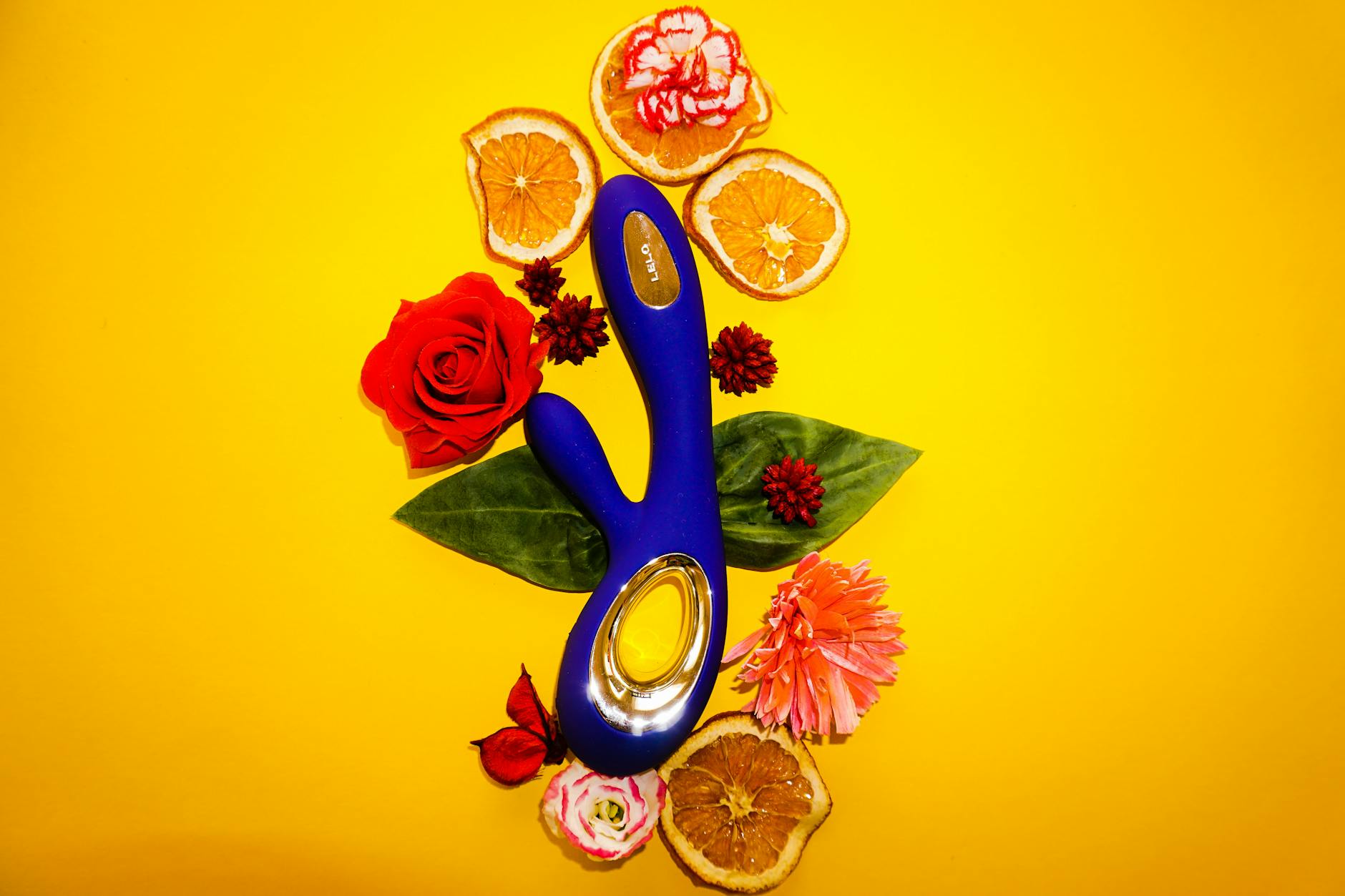
How Lemon Vibrators Help When Sensation Changes During Pregnancy
Pregnancy rewires arousal. Your sensitivity shifts, your body feels unfamiliar, and what worked before might not work now. Here's what to expect and how to reconnect.
Let's be real: pregnancy is one of the most profound physical transitions your body will go through. Your hormones are flooding your system. Your skin is changing. Your sensitivity is rewiring. And yes, your sexual response is shifting too. Most conversations about pregnancy and sex focus on what's "safe" to do. Almost nobody talks about what actually feels good anymore.
That's the gap we're filling here. Because sensation during pregnancy doesn't just change. It gets complicated. Sometimes more sensitive. Sometimes less. Sometimes in ways that feel completely new and disorienting.
Three things are happening at once. First, your estrogen and progesterone levels are rising steadily, which increases blood flow to your pelvic region. Sounds great in theory. But increased blood flow doesn't always feel like increased pleasure. It often feels like pressure, heaviness, or hypersensitivity. Your vulva might feel tender to touch. Your clitoris might feel almost too reactive.
Second, your entire nervous system is recalibrating. Your brain is preparing for labor and delivery, which means your body is priming certain nerves while dampening others. The same touch that felt amazing three months ago might now feel uncomfortable or scattered. You're not imagining this. It's neurological.
Third, there's the psychological layer. Your body doesn't feel like yours anymore. You're hyperaware of your belly. You might feel self-conscious or disconnected. Arousal lives partly in your head, and when your head is worried or distracted, your body can't fully respond. This is especially common in the second and third trimesters.
First trimester sensitivity is wildly individual. Some people report increased clitoral responsiveness. Others feel almost nothing. Nausea and exhaustion often win over arousal anyway. The takeaway: don't expect consistency.
Second trimester is often called the "honeymoon" period of pregnancy sex. Blood flow is up, nausea usually drops, and many people report stronger orgasms than before pregnancy. But increased sensation can also mean increased tenderness. Direct clitoral contact might feel too intense. This is where air-suction technology becomes genuinely useful. Tools like The Lem work by stimulating nerves without direct pressure, so you get intensity without discomfort.
Third trimester is a mixed bag. Your belly is large, positioning is harder, and your center of gravity is completely off. Sensation might feel duller because your body is focused on preparation and discomfort elsewhere. Some people find they need more stimulation to reach orgasm. Others find that any genital touch feels irritating.
Traditional vibrators often use direct friction or direct pressure on the clitoris. During pregnancy, when your tissues are already engorged and sensitive, that can feel overwhelming or even painful. Air-suction technology works differently. It creates a gentle seal and stimulates the nerves through rhythmic pulsing rather than constant contact pressure.
For pregnant people, this usually means three things become possible again. One: you can control the experience without your body deciding it's too much. Two: the sensation feels different from what you're used to, which can actually help if your usual response patterns have shifted. Three: you're not fighting discomfort to chase pleasure. You're working with your body instead.
The Lem's light weight also matters when you're carrying extra physical load. You're not straining to hold a bulky toy. You're using something designed to be intuitive.
Honestly, this is the part nobody discusses but everyone struggles with. By month six or seven, lying on your back feels uncomfortable. Your belly is in the way. You can't quite get to the right angle. Many people assume this means solo pleasure is off the table.
It's not. You just need different positions.
Side-lying is often most comfortable. You're not putting pressure on your belly, your pelvic floor isn't working against gravity, and you can reach yourself easily. Reclined with pillows supporting your back (not flat on your back, but propped up at a 45-degree angle) works for some people. A small wedge pillow or pregnancy pillow can make a huge difference.
Sitting also works, especially if you're using something hands-free or remote-controlled. The point is that you're not locked into the positions that worked pre-pregnancy. Different geometry, different tools, and different timing all mean a completely workable experience.
Some pregnant people hit a wall where arousal just doesn't arrive. You might want pleasure intellectually but feel nothing emotionally or physically. This is surprisingly common and has several causes. Your body might be redirecting energy to pregnancy maintenance. Your nervous system might be genuinely dampened by progesterone. Or you might simply be exhausted, and exhaustion kills arousal faster than anything else.
If this is where you are, the answer isn't to push harder. It's to redefine what pleasure is for you right now. Orgasm might not be the goal. Connection to your body might be. Sensation without outcome. Building arousal slowly instead of chasing quick results.
Using a lemon clitoral vibrator at the lowest settings, with no performance expectation, often helps people reconnect. You're not trying to climax. You're just noticing what your body is capable of feeling. That's often enough to rebuild trust in your body.
If you have a partner, this is where things get tricky. Pregnancy changes what you need, but your partner often doesn't know that. They might think they're doing the same things that always worked, and you're responding differently. Or they might feel anxious about whether sex is even safe. Or they're dealing with their own complex feelings about your changing body.
The conversation that actually helps goes like this: "My body is different right now, and I need different things. This isn't about you or about anything you did. It's about my nervous system recalibrating. Here's what feels good now." Then show them. Not theoretically. Physically. Let them see you use a vibrator. Explain what sensation you're actually experiencing. Most of the awkwardness dissolves when someone understands they're not failing, they're adapting.
Some pregnant people find that involving their partner in the process helps rebuild connection. Others need solo space to figure out their new body first. Both are valid.
If pain appears during or after sexual activity, mention it to your OB or midwife. Pregnancy can trigger conditions like pelvic girdle pain or round ligament pain that make certain positions or activities uncomfortable. This isn't a reason to avoid pleasure, but it's a reason to find different approaches.
If you're bleeding or leaking fluid after sex or masturbation, that's also worth mentioning. Most of the time it's nothing concerning, but your provider can rule out placenta previa or other conditions that might change what's safe.
And if you're struggling with desire or arousal persistently, talk about it. Pregnancy depression is real, and it often shows up first as a loss of interest in things you usually enjoy. Getting support matters.
Something worth knowing now: your sensation will normalize after pregnancy. But it might take months. Postpartum hormones are their own thing. If you're breastfeeding, estrogen stays suppressed, which means sensation might feel muted for longer. If you had vaginal tearing or a C-section, your nervous system needs time to rebuild sensitivity in that area.
This isn't forever. But it's also not instant. Knowing that up front helps you be patient with your body instead of frustrated by it. Many people find that by six to nine months postpartum, sensation is shifting back toward baseline. Some find it feels even better than before, with deeper awareness and different responsiveness.
The tools that help during pregnancy often help during that postpartum recalibration too. Gentler approaches, lower intensities, air-suction rather than traditional vibration. Your body's been through something. It deserves patience.
Yes, absolutely. Vibration doesn't cause miscarriage, harm the fetus, or increase infection risk if the toy is clean. The baby is cushioned by amniotic fluid and the uterine wall. What matters is that you're listening to your body and not pushing past discomfort. If something feels wrong, stop. But vibration itself is completely safe.
Your clitoris has roughly 8,000 nerve endings, and during pregnancy, blood flow to that area increases significantly. More blood flow means your tissues are more engorged, which makes the nerve endings more reactive. The same pressure that felt good before now feels overwhelming. This usually passes, but in the meantime, lower-intensity tools or air-suction vibrators that spread stimulation across a larger area often feel better.
Yes. Most pregnant people can and do. Orgasms during pregnancy are generally safe, though some people notice they feel different. Braxton Hicks contractions might happen after orgasm, which can feel alarming but is usually harmless. If you have a condition like placenta previa or a cerclage, your provider might recommend against orgasm, so check with them if you have a high-risk pregnancy.
Not permanently, but postpartum sensation is different from pre-pregnancy for a while. Some people report it eventually feels even better. Others notice it takes a few months to normalize. Breastfeeding suppresses estrogen, which can keep sensation muted longer. By a year postpartum, most people report sensation returning to close to baseline, with individual variation.
Side-lying is usually most comfortable because you're not putting pressure on your belly or your back. Reclined with pillows (not flat) works for some. Sitting also works. Avoid lying flat on your back after about the 20-week mark, as it can restrict blood flow. Experiment and see what your body prefers. You'll know quickly what doesn't work.
Almost always yes. If sensation feels numb or distant, it's usually temporary and related to hormonal shifts or nervous system recalibration, not permanent damage. Postpartum, as hormones settle and you heal, sensation typically returns. If it doesn't after several months postpartum, that's worth discussing with your provider, but it's rarely a long-term issue.
Pregnancy is a season of your life, not a permanent state. Your body is doing something extraordinary, and yes, that means sensation is going to shift. Sometimes dramatically. That's not a sign that you're broken or that pleasure is off limits. It's a sign that you need different tools and different expectations.
The Lemon Toys collection, especially air-suction vibrators, are designed with exactly this kind of transition in mind. Lower pressure, customizable intensity, intuitive controls. Tools that work with your body, not against it.
Your pleasure matters now. Not after the baby arrives. Not when you're "back to normal." Now. During this massive, temporary, extraordinary transformation. Give yourself permission to explore what feels good in this season, and give yourself grace when it's not the same as last season. Your body will come back. But for now, it belongs to this moment.