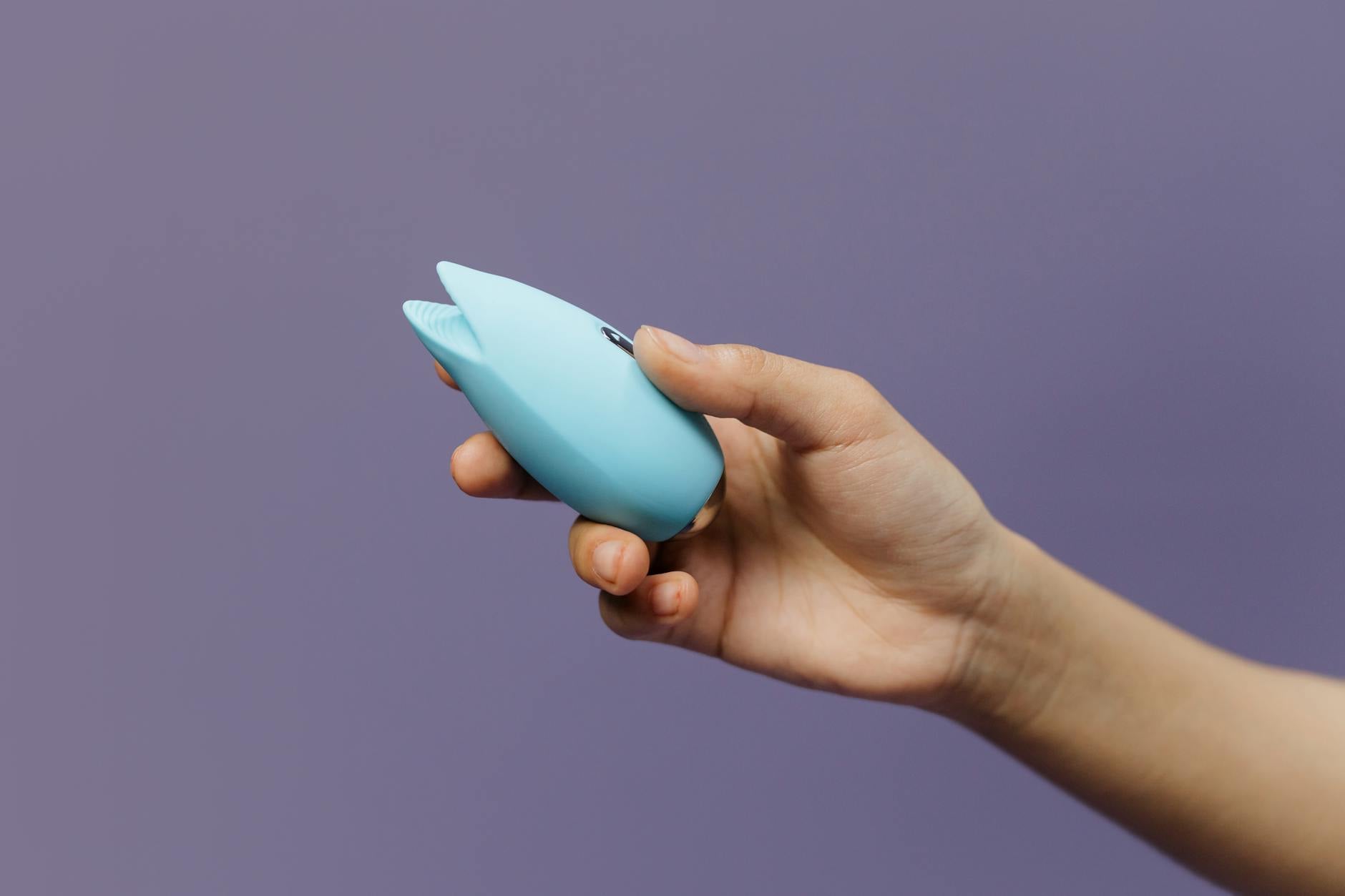
How Lemon Vibrators Help With Reduced Sensation From Birth Control Pills
Many people on hormonal birth control report flattened clitoral sensation. It's not imaginary, it's not permanent, and there are concrete ways to get sensation back.
You get reliable contraception. You get lighter periods. You get fewer cramps. And then, somewhere between week three and month three, you might notice that your clitoris has gone quiet. Not gone. Quiet. Like someone turned down the volume on sensation you've relied on for years.
If you've felt this, you're not alone. Research suggests 15 to 40 percent of people on hormonal birth control experience some degree of sexual side effects, and reduced clitoral sensation is one of the most common ones that people don't talk about. They don't talk about it because they're told it's not real, or it will pass, or it's worth the trade-off. Sometimes it is. But first, you deserve to understand what's actually happening in your body.
The pill, the patch, the ring, the implant. They all work by suppressing ovulation, which means they suppress the hormonal fluctuations that normally happen across your cycle. This includes suppressing testosterone.
Yes, people with vulvas produce testosterone. It's made in the ovaries and adrenal glands, and it's a major driver of clitoral sensitivity and sexual motivation. When you start hormonal birth control, testosterone levels drop. Sometimes they drop a lot.
That drop changes the sensitivity of nerve endings in the clitoris. It's not that the nerve endings disappear. They're still there, still capable of firing. But they need more stimulation to reach the same threshold. Things that used to feel amazing now feel... fine. Ordinary. The pleasure is still physically possible, but it requires more effort to access it.
There's also a vascular component. Testosterone supports blood flow to genital tissue. Less testosterone means slightly less engorgement, which means less swelling and less pressure sensation. Combine that with the fact that some birth control formulations can lower overall blood viscosity, and arousal takes longer to build and feels less pronounced.
The timing matters. Some people notice the sensation change immediately. Others don't notice for months. And some people are lucky and don't notice at all. It depends on your baseline testosterone, the specific formulation you're on, and individual variation in how your body responds to hormone suppression.
This distinction is crucial because it changes what you can actually do about it.
Lost sensation means the nerves aren't firing at all, or the neural pathway is blocked. Flattened sensation means the nerves are firing, but they need more stimulation to cross the threshold into pleasure. Birth control almost always creates flattening, not loss. This is important because flattening is addressable.
When sensation is flattened, what you need is not more intensity delivered the same way. You need a different kind of stimulation that bypasses the flattening. This is where air-suction lemon vibrators change everything.
Unlike traditional vibrators, which rely on rapid oscillation across the surface of the clitoris, air-suction toys like the lemon clitoral vibrator work by creating a gentle vacuum that draws the clitoral tissue inward and stimulates the internal nerve endings, not just the surface ones. For people with flattened sensation, this creates a totally different neural pathway into pleasure.
It's not that the sensation magically returns to baseline. It's that you're accessing pleasure through a mechanism that the birth control hasn't dulled. You're going around the problem instead of trying to overpower it.
Think of your clitoris like a control panel with multiple input channels. Traditional vibrators send all their signal through the "surface stimulation" channel. That channel gets dampened by hormone suppression.
Air-suction vibrators send signal through the "internal pressure and suction" channel. This channel doesn't get dampened the same way because it's not relying solely on surface nerve sensitivity.
What does this feel like in practice? Many people report that clitoral vibrators feel more "full" and less surface-level. The sensation has more depth. It builds differently. Some people reach orgasm faster with air-suction toys than they ever did with traditional vibrators, even when sensation feels flattened in everyday life.
I've worked with clients who felt their pleasure flatlined within weeks of starting the pill, tried every vibrator on the market, and then had a completely different experience the first time they used an air-suction lemon toy. Not because it's magic, but because it's working with your physiology instead of against it.
Strategy one: Use an air-suction lemon vibrator consistently. Not occasionally, not as a backup. Make it your primary tool. Your body needs about two to three weeks to "learn" the new sensation pathway and for your nervous system to calibrate to it. After that, many people report that sensation feels more accessible overall, not just during toy use.
Strategy two: Extend warm-up time and reduce performance pressure. When sensation is flattened, your nervous system needs more runway to cross into arousal. Budget 20 to 30 minutes for foreplay instead of 5 to 10. Remove the expectation that arousal should happen fast. Flattened sensation is not broken sensation. It just operates on a different timeline. Many people find that when they stop rushing, sensation actually feels deeper because they're more relaxed.
Strategy three: Check your formulation. Not all birth control is equal when it comes to sexual side effects. Some ultra-low-dose pills and some progestin-only methods create less hormone suppression than others. If sensation loss is really affecting your quality of life and nothing else is working, a conversation with your gynaecologist about switching formulations is worth having. But this takes trial and error, and in the meantime, a lemon vibrator is a concrete tool you can use today.
When you start using an air-suction lemon vibrator for the first time with flattened sensation, the experience might feel strange. Your clitoris might feel more present than it has in months, which can be overwhelming or emotional or just plain weird.
Some people report mild soreness afterward, like the tissue is waking up. This is normal and usually resolves within a few days. Start at the lowest setting. You can always increase intensity. You cannot undo aggressive intensity.
Some people don't feel much the first time at all. This is also normal. Your body is learning a new sensation pathway. Give it three to five sessions before deciding whether this is working for you. Most people feel a noticeable shift by week two.
If you're partnered, there's a good chance they've noticed the sensation change too, even if you haven't said anything directly. Here's the thing: reduced sensation from birth control is not a reflection of desire or attraction. It's a physiological side effect of a medication. Framing it that way, clearly and early, prevents a lot of misunderstanding.
Some partners worry that introducing a toy means they're doing something wrong. They're not. You can explain it the way I just did: birth control suppresses a hormone, that hormone affects surface sensitivity, air-suction toys access sensation through a different pathway. It's not about him or her or them. It's about physiology.
Many couples find that introducing a lemon vibrator creates a different kind of intimacy. It shifts the focus from "are you coming" to "what does your body actually need right now." That's valuable.
If sensation loss is severe, persistent, and affecting your relationship or sense of self, switching birth control is a legitimate option. But it's worth trying the lemon vibrator approach first because the sensation often improves faster than you'd think.
If you're also experiencing other side effects (mood changes, libido loss beyond just sensation, pain, bleeding changes), those are separate conversations to have with your gynaecologist. Sensation loss sometimes travels with other side effects, and your doctor needs to know the full picture.
When you're ready to try a different birth control, ask about progestin-only options or ultra-low-dose formulations. They tend to suppress testosterone less aggressively. Expect at least three months on any new method before deciding if it's better.
Birth control is a phenomenal thing to have access to. And it's also okay to acknowledge that it comes with trade-offs. Reduced clitoral sensation is one of them, but it's not permanent and it's not something you have to just accept.
A lemon clitoral vibrator isn't a workaround for a bad medication choice. It's a tool that works with your body's actual neurology to access sensation through a different pathway. Many people find that it restores not just orgasm capacity, but the sense of being embodied and present in pleasure. That matters.
Most people notice a shift within two to three weeks of consistent use. Some feel it in the first week. A few need four to five weeks for their nervous system to fully calibrate to the new sensation. Consistency matters more than frequency. Using it twice a week for three weeks will show better results than using it intensely for one week and then stopping.
Absolutely. In fact, that's exactly what they're designed for. You don't need to stop your birth control or switch methods to benefit from an air-suction lemon toy. Many people use them alongside hormonal contraception specifically because sensation loss from birth control is so common. The vibrator isn't a replacement for your method. It's a tool that works with your body while you're on it.
Often, yes. If you switch to a method that suppresses testosterone less, sensation usually improves within two to four weeks. But "baseline" varies. Some people's sensation bounces back fully. Others find it takes longer or reaches a new normal. This is why coming off hormonal birth control deserves its own conversation if you're considering it.
Your gynaecologist doesn't need to know your vibrator habits, but they do need to know about reduced sensation if it's affecting your quality of life. Frame it as a side effect of the medication. That opens the conversation about whether it's worth switching formulations. The vibrator itself is just a tool you're using to manage the side effect. If your doctor seems uncomfortable with that conversation, it might be worth finding a provider who isn't.
No. Sensation loss from birth control is specifically about hormone suppression dulling nerve sensitivity. Sensation loss from anxiety, medications like antidepressants, or nerve damage operates through different mechanisms and sometimes requires different tools. If you're experiencing sensation loss and you're also on antidepressants or managing anxiety, those might be contributing factors too.
If you've given it a genuine three to four week trial and nothing has shifted, a few things are worth exploring. One, you might need to switch birth control formulations. Two, sensation loss might have multiple causes (stress, anxiety, relationship dynamics) that a vibrator can't address alone. Three, you might simply respond better to a different type of stimulation. Everyone's neurology is different. If an air-suction toy isn't your thing, that's information too.
Reduced sensation from birth control is fixable. It doesn't require stopping your method. It doesn't require shame or accepting diminished pleasure as the price of contraception. A lemon clitoral vibrator is a direct, evidence-aligned tool that works with your body's actual neurology to restore sensation through a different pathway.
If you want to understand more about how lemon vibrators work for different sensations and bodies, our buying guide walks through the options and how to choose. And if you have questions about whether this is the right tool for your specific situation, reach out. We're here to help.