The thing nobody talks about
You can want sex and not be aroused by it. That contradiction is real, and it's weirdly common. Desire and arousal are not the same system, and when they're out of sync, everything feels broken.
Here's what's actually happening: your brain says yes, but your body says "not yet." Or worse, your body says nothing at all. You're not broken. You're experiencing two separate neurological processes that have temporarily disconnected.
What desire and arousal actually are
Desire is motivation. It's the thought, the want, the decision that you'd like to have sex. It lives in your brain, influenced by relationship satisfaction, stress levels, hormones, and whether you're currently thinking about your partner or your tax return.
Arousal is physical readiness. It's blood flow, lubrication, muscle tension, skin sensitivity. It's your nervous system saying "go." Arousal happens as a response to touch, visual stimulation, mental fantasy, or sometimes nothing at all.
Normally, they talk to each other. You feel desire, your body responds with arousal, and things progress naturally. But sometimes the conversation breaks down. You're mentally into it, but your vulva doesn't get the memo. Or you're physically responding, but your brain is somewhere else entirely.
When desire and arousal split, the gap feels like failure. It's not. It's information.
Why the disconnect happens
Three major culprits show up most often in my practice.
Stress and the nervous system. When you're stressed, your body prioritizes survival over pleasure. Your sympathetic nervous system (the fight-or-flight branch) stays activated. Arousal requires the parasympathetic nervous system (rest-and-digest). You can want sex while your nervous system is literally defending against a perceived threat. Want doesn't override physiology.
Relationship friction underneath. Sometimes the disconnect shows up when there's a small resentment you haven't named, a boundary that's soft, or a conversation you're avoiding. You decide you want sex because it's been a while, or because you think you should. But your body knows something your brain hasn't admitted yet.
Sensory threshold shifts. Your body's sensitivity to touch changes constantly. Hormonal cycles, stress, medication, age, depression, anxiety. What used to feel good might feel muted or irritating now. Desire stays the same, but arousal can't reach the baseline it used to. You're touching familiar pleasure spots, and they're not answering.
How lemon clitoral vibrators bridge the gap
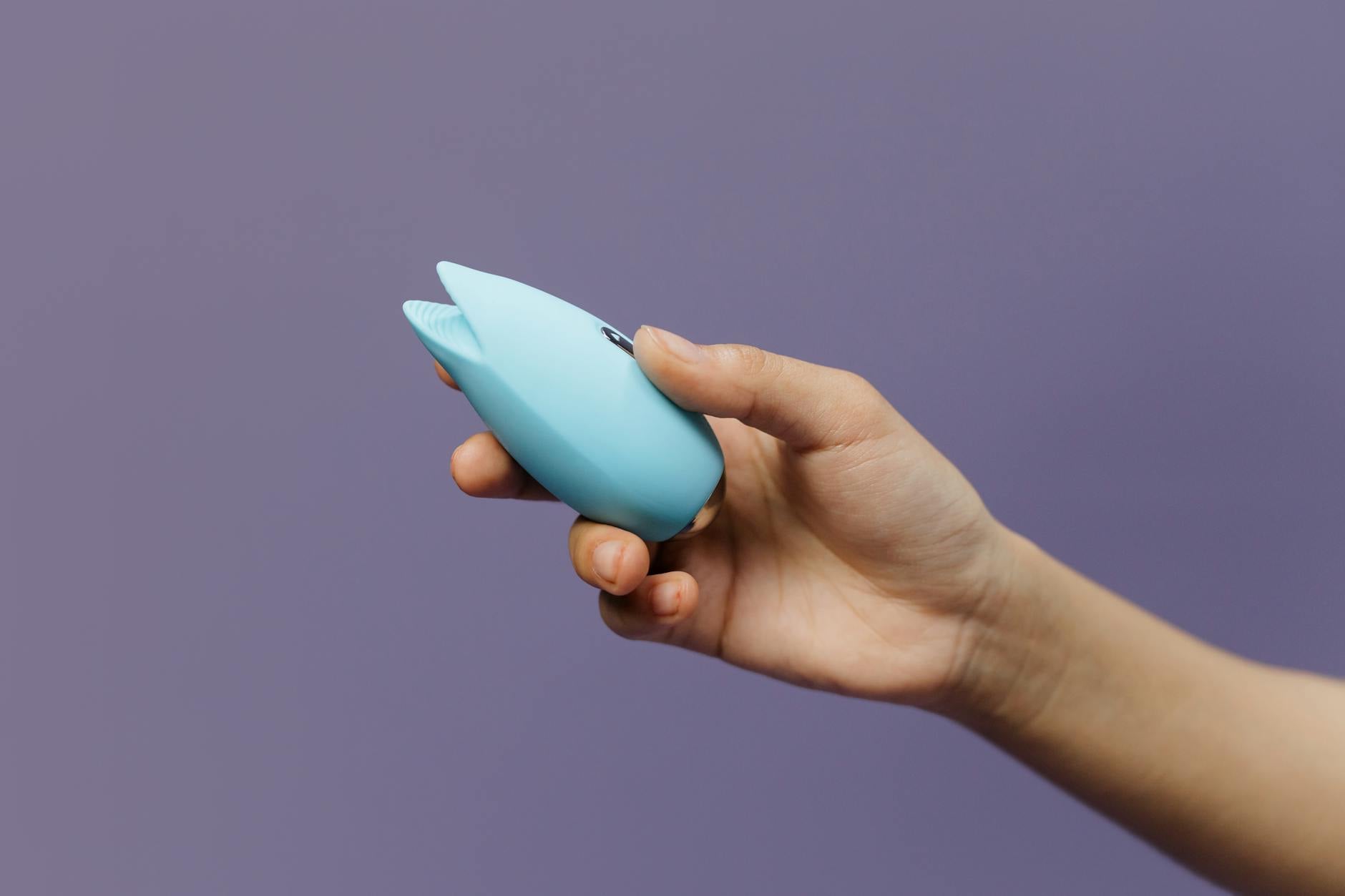
Here's where the Lem or other lemon sexual toys actually come in. A good clitoral vibrator doesn't create arousal from nothing. What it does is amplify your body's ability to respond.
The Lem works through air-suction technology, which stimulates the thousands of nerve endings in the clitoris through gentle, consistent pressure rather than direct friction. For someone whose arousal threshold has shifted (whether from stress, medication, hormonal changes, or relationship dynamics), this means the gap between desire and physical readiness gets smaller.
You want it. Your body needs a stronger signal to follow. Lemon vibrators provide that signal.
The other thing that happens: sometimes the act of introducing a tool creates a permission slip. You're not relying on your partner's touch or your own familiar techniques. You're trying something different, which can shift the mental weight around sex. That's not nothing.
A practical framework for reconnecting
If you're experiencing the desire-arousal gap, try this sequence.
First, name it. Don't have sex and hope arousal catches up. Stop, breathe, and tell yourself (and your partner if they're there) what's happening. "I want this, but my body's not ready yet. Let's slow down." That's not rejection. That's information.
Second, lower the pressure. Remove the expectation of intercourse. You're not working toward an outcome. You're exploring sensation. This matters because pressure kills arousal. It activates that fight-or-flight nervous system again. You need the opposite.
Third, introduce touch without judgment. Start with your hands or a partner's hands. Non-sexual touch first. A massage, stroking your own arm, cuddling. Your nervous system needs to know it's safe. Arousal can't show up until safety is confirmed.
Fourth, add a lemon clitoral vibrator. Once you've spent ten to twenty minutes on touch and connection, the Lem or another high-quality lemon vibrator can help your body catch up to your mind. Start on the lowest setting. You're not trying to orgasm. You're trying to wake up sensation.
Some people feel arousal within minutes. Some take longer. Both are fine. The point is you're cooperating with your body instead of pushing against it.
The mental piece (which is 80% of this)
Your brain is part of your arousal system. Maybe the biggest part.
If you're someone who tends to shut down desire when your body doesn't respond quickly, you're creating a feedback loop. You want sex. Your body hesitates. You interpret that hesitation as a sign you don't actually want sex. So you stop trying. Your body relaxes (good), but your desire shuts down too (not helpful).
Break that loop by separating the two things. "I want sex and my body is taking time to respond" is different from "I don't want sex." Say that out loud. Your nervous system is listening.
With a partner, the conversation matters. If they understand that desire and arousal aren't locked together, they won't interpret your body's slow response as rejection of them. They'll see it as what it is: your nervous system needing a bit more runway.
When to seek help
If the gap between desire and arousal is new, and you can trace it to a specific stressor or life change, the tools above usually help within a few weeks.
If the disconnect has been present for months, if arousal feels completely absent even during solo exploration, or if desire has dropped too, talk to a sex-positive therapist or your GP. There might be something medical (medication side effects, hormonal shifts, sleep deprivation) that needs attention.
Some people benefit from working with a sex therapist who specializes in desire issues. I often recommend this when the disconnect is tied to relationship dynamics. A professional can help you and your partner rebuild communication around pleasure in ways that solo tools can't.
 Photo by DRT.fm on Pexels
The rhythm of reconnection
Desire and arousal are meant to dance together, but they don't always move in sync. That's not failure. That's just how bodies work under stress, change, or transition.
Lemon vibrators help because they meet your body where it actually is instead of where you think it should be. They amplify sensation, remove friction from solo exploration, and sometimes give permission that nothing else can. But the real work is in the conversation between your brain and your body. The Lem is a tool. The mindset shift is the thing that lasts.
Start by naming the gap. Be gentle with yourself while your nervous system catches up. Use whatever helps (that might be a clitoral vibrator, that might be time, that might be conversation). And remember that a slow arousal response isn't a dysfunction. It's your body asking for something different.
People also ask
Why can I feel desire but no physical arousal? Desire lives in your brain (motivation, want, decision). Arousal lives in your nervous system (physical readiness, blood flow, sensation). Stress, relationship friction, medication, and hormone shifts can interrupt the communication between these two systems. Your brain says yes while your body is still deciding, or your body is protecting itself because your nervous system thinks there's a threat. This is normal and fixable.
Can lemon vibrators help if I feel completely numb? Clitoral vibrators like the Lem work by delivering consistent, amplified stimulation to highly sensitive nerve tissue. If you're experiencing numbness or reduced sensation, the technology itself can help your body register pleasure signals. That said, if numbness is paired with low desire, fatigue, or mood changes, check in with your doctor. Numbness sometimes signals depression, medication side effects, or hormonal shifts that need professional support.
How long does it take for desire and arousal to reconnect? That depends on what caused the split. If it's situational stress, a few weeks of using the tools above often helps. If it's tied to relationship tension, it may take longer because you're rebuilding trust and communication. If it's medical or medication-related, the timeline depends on treatment. Work with your body, not against it.
Is it normal for my partner and I to have different arousal speeds? Completely normal. Most couples have one faster and one slower responder. The gap becomes a problem only if you interpret it as rejection or pressure. Talking about it directly ("You take longer to warm up and that's fine") removes the shame and lets you plan differently. Maybe you spend more time on foreplay. Maybe they explore solo pleasure while you catch up. Different speeds aren't incompatible.
Should I use a lemon vibrator alone or with a partner? Both work. Solo, you have full control and can experiment without performance pressure. With a partner, the vibrator can be part of foreplay, or they can use it on you while you focus on relaxation. The best approach is whatever feels less pressured. If you're trying to rebuild arousal, lower-stakes exploration (solo, no goal in mind) often works first. Once you're reconnected with your body, partnered exploration becomes easier.
What if I want sex but feel guilty for needing extra stimulation? That guilt is a third system you don't need in the room. Your body has changed, your nervous system is stressed, your sensitivity has shifted. That's not weakness or failure. That's reality. Everyone needs different things at different times. Needing a clitoral vibrator or longer foreplay isn't a limitation. It's information about what works for you right now. Honor it.
References
Levin, R. J. (2014). The clitoris: An appraisal of its reproductive functions over the life course. Reproductive Sciences, 22(9), 1155-1172.
Barasch, D. P., & Lipton, J. E. (2009). The myth of monogamy: Fidelity and infidelity in animals and people. Holt, Henry.
Vorvick, L. J., & Schain, L. (2012). Female sexual dysfunction. University of Michigan Health System Clinical Care Guidelines.
Gottman, J. M., & Silver, N. (2015). The seven principles for making marriage work: A practical guide from America's foremost relationship expert. Harmony Books.
Nakazawa, D. J. (2015). Childhood disrupted: How your biography becomes your biology, and how you can heal. Atria Books.