The strange moment when your body wakes up
Here's the thing about depression and desire: they're not separate issues. Depression doesn't just make you sad. It narrows everything. Your sense of smell gets duller. Food tastes like cardboard. Your body feels like it belongs to someone else. And pleasure, especially sexual pleasure, vanishes into static.
Then one day it starts coming back. Maybe your medication changed. Maybe therapy finally clicked. Maybe time did what time does. And suddenly you're noticing your partner again. Your body sends a signal it's been years since you felt. You think, "Oh. I want to feel good again."
That moment is real and valid. But it also comes with a problem: your nervous system has been offline for months or years. Reconnecting with pleasure isn't automatic. It requires intention, patience, and usually, the right tool.
What depression does to your sexual response
Depression disrupts arousal at every level. The neurochemical part first: serotonin, dopamine, and norepinephrine are all involved in desire and arousal, and depression flattens all three. Your brain literally produces less of the chemicals that make pleasure possible.
Then there's the physical part. If you haven't been aroused or touched yourself in months, your pelvic floor tightens. Your genital tissue gets less blood flow. Your nervous system goes into protection mode. When sensation finally tries to come back, your body might reject it. You might feel numb. Or overstimulated. Or both, depending on the moment.
Anti-depressants can add another layer. SSRIs in particular are notorious for flattening libido, even as they lift depression. That's not a reason to stop taking them (never do that without talking to your doctor). But it does mean reconnecting with pleasure sometimes requires different equipment or approach.
Why lemon clitoral vibrators work particularly well here
I recommend lemon vibrators to clients returning to pleasure after depression for three specific reasons.
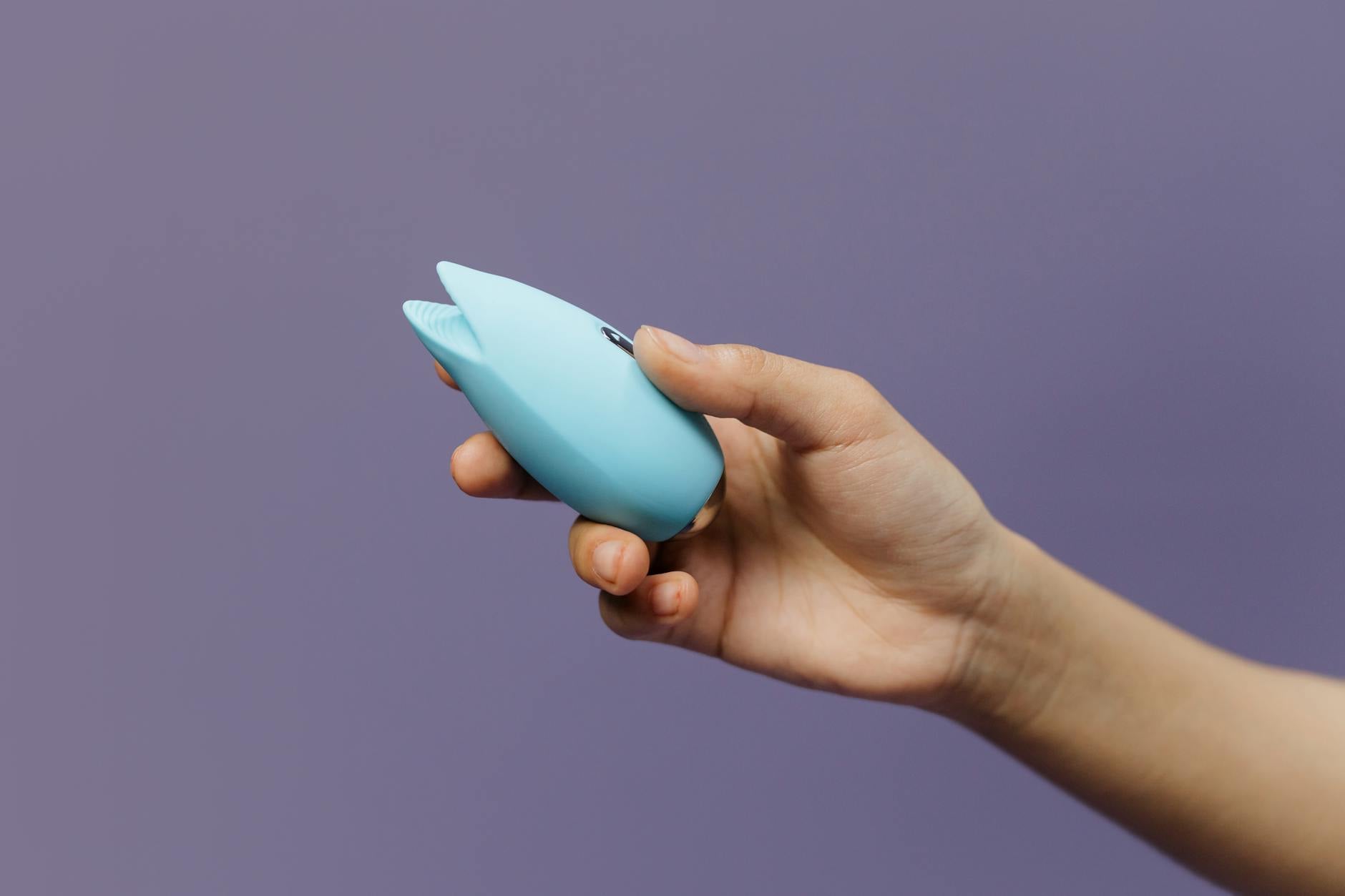
First, the sensation is completely different from what your body was used to. If you spent five years without arousal, your nervous system has no "before" memory to compare this to. That's actually helpful. A clitoral vibrator like those from The Lemon Toys doesn't feel like a traditional vibrator. The suction-based stimulation wakes up nerve endings in a gentler, more localized way. Your body gets to experience pleasure as novelty rather than as a return to something that failed.
Second, you're in control of the pace. Depression often arrives with shame about your body, your sexuality, your "laziness." That shame makes it hard to be kind to yourself during reconnection. A clitoral vibrator lets you choose exactly how much intensity you want, exactly when. There's no pressure to perform. No partner waiting for you to "get there." Just you and a decision about what feels good right now.
Third, they work with how your nervous system is actually functioning. After depression, your arousal response is slower. You need longer warm-up time. Your body needs gentleness before intensity. Lemon sexual toys are designed to provide deep, satisfying stimulation without requiring you to thrust or move or "do" anything. You can lie completely still and let sensation build. That's powerful when your nervous system is learning to trust pleasure again.
How to actually start using a lemon vibrator safely
The first time you use a clitoral vibrator after depression, you're not trying to have an orgasm. You're trying to have a conversation with your body.
Start by lying down somewhere comfortable where you won't be interrupted. Set a timer for 10 minutes. Your only job is to explore what sensations exist and what feels okay. Don't have a goal. Don't try to reach anything. Just notice.
Turn the vibrator to the lowest setting. Start away from your clitoris entirely. Run it along your inner thighs. See how your skin responds. Notice if you feel anything at all. If you feel nothing, that's not failure. That's data. It tells you your nervous system is still in protection mode and needs gentleness.
Move slowly toward the vulva. You don't have to touch your clitoris with it. The external tissue has nerve endings too. Spend time there. If at any point you feel numb or overwhelmed, stop. This isn't about pushing through. It's about learning your body's current language.
Over the next few weeks, repeat this in small doses. Each time, you're teaching your nervous system that pleasure is safe again. You're rebuilding the neural pathways that depression interrupted. This is gradual work. That's the whole point.
The role of shame and how to move past it
Here's what I see most often: someone returns to desire after depression, and immediately they feel guilty about the years they "missed." Or they feel stupid for needing a tool. Or they're embarrassed that their body doesn't work the way it used to.
That shame will tank this process faster than anything else.
You didn't choose depression. You didn't choose how it affected you. Your body isn't broken because it needs time and tools to reconnect with pleasure. Your body is actually being incredibly smart. It's rebuilding in stages. It's learning to trust sensation again. That's intelligent adaptation, not failure.
When shame comes up (and it will), name it and move on. "That's shame talking. My body is doing exactly what it's supposed to do right now." Keep using the vibrator anyway. Keep showing your nervous system that this is safe.
If shame is overwhelming, talk to your therapist about it. That's their job. They can help you untangle what you believe about your sexuality from what's actually true.
Timing matters: medication, hormones, and arousal
If you're taking an SSRI, the best time to use a lemon vibrator is often 2 to 4 hours after you take your dose. That's when medication levels are most stable and your serotonin is most balanced. If you always use it at the same time, your body learns to expect the ritual. That helps.
If you menstruate, your hormones also matter. Right after your period, estrogen rises and arousal is usually easier. Mid-cycle, around ovulation, desire often peaks. Right before your period, progesterone dominates and arousal can feel harder. None of this is wrong. You're just working with your body's natural rhythm.
Track a few cycles of when pleasure feels most accessible. Use that information. Don't fight your biology. You're rebuilding trust with your body. Meeting it where it actually is, instead of where you think it should be, is how that works.
Bringing a partner into this (if you have one)
If you're in a relationship, your partner probably noticed when depression flattened everything. They might be relieved that desire is coming back. They might also have their own feelings about the years without physical connection.
Have a conversation before you bring a lemon vibrator into shared space. Say what you need: "I'm learning to reconnect with pleasure. I need solo time to do this. It's not about you. It's about my nervous system rebuilding trust." That's honest. That matters.
You don't owe anyone access to this process. Not until you're ready. Some people find that after solo reconnection, sharing it with a partner becomes possible. Some people find that their comfort with solo pleasure is enough. Both are fine.
If you do eventually explore it with a partner, the same rule applies: no pressure, no timeline. Your partner's job is to be curious and supportive, not to make this about their pleasure. If they can't do that, that's information too.
When to know you're ready to explore other kinds of touch
After a few weeks of solo use, your body will start sending clearer signals. You might feel warmth returning to your genitals. You might notice arousal building faster. You might start craving different kinds of stimulation. These are all signs your nervous system is healing.
That's when you might try adding manual touch. Or exploring a partner's touch. Or trying different patterns on your lemon vibrator. The key is that you're following your body's lead, not forcing a timeline.
If numbness returns, that's okay. Go back to gentler solo use. Healing from depression isn't linear. Your nervous system gets to move at its own pace.
FAQ: Returning to pleasure after depression
Is it normal to feel nothing during the first few weeks of using a clitoral vibrator?
Completely normal. Depression numbs sensation at a neurological level. When you start using a lemon vibrator, you're asking your nervous system to wake up. That takes time. Keep using it without pressure to feel anything. Sensation often returns gradually. Your job is consistency and patience, not achievement.
Can I use a lemon vibrator if I'm still taking antidepressants?
Yes. SSRIs can make arousal harder, but they also make pleasure safer because you're less likely to be in acute emotional pain during intimacy. Some people find that using a clitoral vibrator at a different time of day, or combining it with longer foreplay, helps. Talk to your doctor if you're concerned your medication is too flatly suppressing arousal. Sometimes a dose adjustment or medication switch helps.
How long does it usually take for desire to fully return?
There's no standard timeline. For some people, basic arousal returns within weeks. For others, it takes months or longer. Rebuilding your nervous system's capacity for pleasure is different from just "wanting it again." Be honest about where you are and move at that pace, not someone else's.
What if using a vibrator feels overwhelming or triggers shame?
Pause. That's your nervous system saying it needs slower, gentler reconnection. Try starting with just gentle hand touch, no vibrator. Notice sensation without any goal. When your nervous system feels safer, add the vibrator back in. And talk to your therapist about the shame. It's real, and it deserves attention.
Can my partner use a lemon vibrator on me if I'm still nervous about shared pleasure?
That's entirely your call. Some people find it easier to reconnect with a partner who's focused on their pleasure. Others find it harder. There's no right answer. Start with what feels safest, and expand from there if and when you want to.
Should I expect my first orgasm back to feel the same as before depression?
No. Your nervous system has changed. Depression rewires things. The first orgasm after a long absence often feels different. Weaker. More localized. That's not failure. It's your body saying, "I'm starting to remember." They usually deepen and intensify over weeks and months as your confidence returns.
You're not starting over. You're starting here.
There's a difference. Starting over feels like failure. Starting here feels like next. Your body has been through something hard. Now it's learning to feel good again. That takes the right tools, the right pace, and the radical belief that your pleasure matters. A lemon clitoral vibrator is one tool for that work. Your patience with yourself is the biggest one.
If you're still struggling with reconnection after a few months of consistent, gentle practice, talk to a sex therapist. They can help you work through any blocks that are still there. Your pleasure is worth that investment.
You're not broken. You're rebuilding. And that's exactly where you need to be.