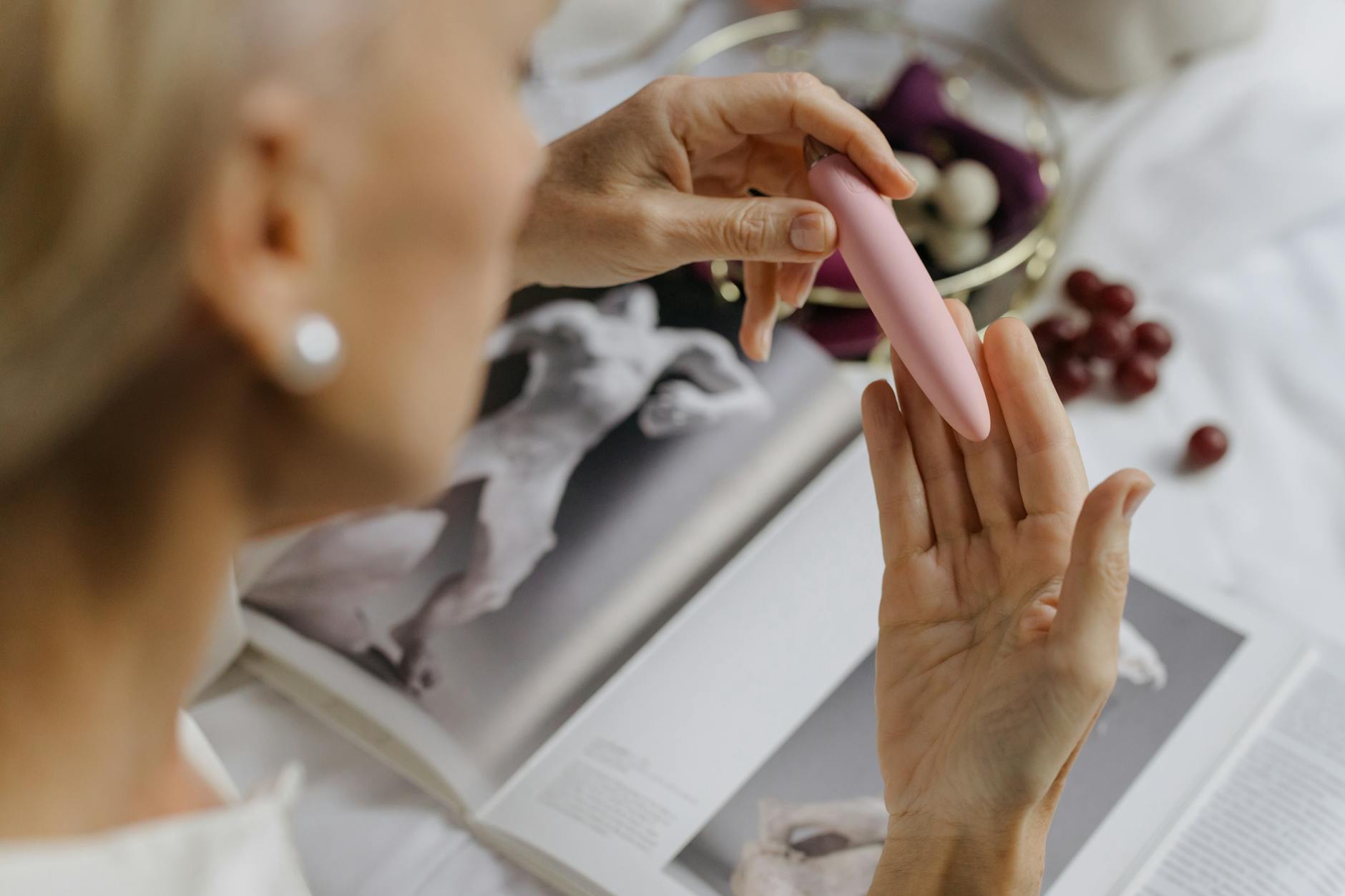
How to Use Lemon Vibrators When Sensation Feels Numb After Anesthesia
Anesthesia can leave your body feeling disconnected for weeks. Here's what's happening, when it's safe to explore pleasure again, and why lemon clitoral vibrators are often the gentlest way back.
Let's start with the honest part. Anesthesia doesn't just put you to sleep. It floods your nervous system with medications designed to block sensation entirely, and those chemicals don't leave your body the moment you wake up. For days, sometimes weeks, your skin feels dull, your body feels like it belongs to someone else, and pleasure feels like a concept you've heard about but never actually experienced.
This is completely normal. And it's one of the least talked-about side effects of surgery.
Most post-surgery guides tell you when you can have penetrative sex again. They don't talk about what happens when you're cleared for activity but your body still feels like it's wrapped in cotton. That gap between medical clearance and actual sensation returning is where most people get frustrated, confused, or give up on pleasure altogether during recovery.
The good news: lemon clitoral vibrators, with their specific pattern of air-suction stimulation, are one of the best tools for gently reawakening sensation during this phase. They work differently than traditional vibrators, and that difference matters enormously when your nervous system is still recalibrating.
General anesthesia works by suppressing your central nervous system. The medications target your brain, spinal cord, and peripheral nerves simultaneously. When you wake up, the anesthesia is metabolized, but residual amounts linger in your tissue for longer than most people realize.
Here's what happens in the days and weeks after:
Your skin feels hyperaware to some sensations (pain, temperature, pressure) while going almost completely numb to others (pleasure, light touch, vibration). This weird dissociation happens because different nerve fibers recover at different rates. Pain receptors reactivate quickly. Pleasure nerves take longer.
If your surgery involved your abdomen, pelvis, or lower body, the numbness tends to concentrate there, even if the incision isn't directly on your genitals. Anesthesia affects a wide area of your nervous system, not just the surgical site.
Most people regain baseline sensation within 2-4 weeks. Some take 6-8 weeks, especially after abdominal or pelvic procedures. This is completely within normal range and doesn't mean something went wrong.
Traditional vibrators rely on rapid mechanical oscillation. Your nerve endings detect the vibration through frequency and intensity. When your sensory system is still dampened by anesthesia, a standard vibrator often feels like nothing, or worse, feels irritating because you're trying to force sensation that isn't there yet.
Lemon clitoral vibrators, by contrast, use air-suction stimulation. Instead of vibrating against your skin, they create rhythmic pressure and release. This pattern of stimulation doesn't require the same level of baseline sensation to register. Suction works on a different neurological pathway than vibration. It engages deeper pressure receptors that often recover faster than the fine-touch receptors that detect traditional vibration.
In practical terms: when you're numb from anesthesia, a lemon vibrator often feels subtle but present, whereas a traditional vibrator might feel like you're holding a dead phone against your skin.
Another advantage. Lemon clitoral vibrators are gentler on freshly-healing tissue. They don't require you to apply direct downward pressure or friction. The suction creates sensation without mechanical agitation, which is critical if you're healing from any abdominal or pelvic procedure.
Here's where it gets specific. Your surgeon will tell you when penetration is safe. That's usually 4-6 weeks after major surgery. But external sensation play is often cleared much earlier, sometimes within 2-3 weeks, depending on the procedure.
Before you use any vibrator, even externally, confirm three things with your surgical team:
First, where is your incision, and is it fully closed and scabbed over. If you can still see the wound opening, wait. If it's closed but the incision line is still tender to gentle touch, you can still use lemon vibrators, but keep them away from the incision site itself.
Second, are you off prescription painkillers. Opioids significantly blunt sensation, making it harder to gauge what you can tolerate. Once you're off them, your nervous system can actually provide accurate feedback.
Third, does your surgeon specifically tell you to avoid clitoral stimulation. Some procedures (like certain gynecological surgeries) come with this restriction for a set period. Most don't. Ask explicitly.
Assuming you get the green light, here's the protocol that works best.
Don't dive in at full intensity. Your nervous system is healing, and you need to teach it to recognize pleasure again.
Week 1-2 after clearance: Just hold your lemon vibrator against your skin without turning it on. Let your body recognize the texture and temperature. This sounds minimal, but it's important. Your nervous system is still recalibrating, and gentle introduction prevents overstimulation.
Week 2-3: Turn on the lowest pattern setting (usually pattern 1 or 2 on a lemon clitoral vibrator). Spend 2-3 minutes with just that pattern. You might feel almost nothing. That's fine. You're not trying to orgasm yet. You're reintroducing your nervous system to the sensation.
Week 3 onward: Gradually increase session length and, if you want, try a slightly higher pattern. But honestly, many people find that patterns 1-3 are sufficient during this recovery phase. You're not trying to reach orgasm. You're reawakening sensation.
The timeline varies. Some people feel significant sensation returning within 2 weeks. Others take 6-8 weeks. Neither is wrong. Your nervous system will recover on its schedule, not on a guideline.
Here's something nobody mentions: anesthesia affects not just physical sensation but also the mental-emotional experience of pleasure. Many people emerge from surgery feeling disconnected from their sexuality entirely, separate from any physical numbness.
This is partly neurological (anesthesia impacts dopamine and serotonin pathways, which affect desire) and partly psychological. You've just experienced your body as a thing that was operated on, and it takes time to reframe it as a thing that can also experience pleasure.
UsingLemon clitoral vibrators during this phase isn't just about physical sensation. It's also a ritual of reclaiming your body as yours. The simple act of choosing to explore pleasure, even gently, sends a signal to your nervous system that you're safe and that your body is worth attention.
Don't be surprised if the first few sessions feel more emotional than physical. That's normal and healthy.
Anesthesia affects your body's lubrication production. Even if you're not experiencing vaginal dryness from anesthesia itself, you might experience it from stress, reduced physical activity, or pain medication side effects.
Use a water-based lubricant with your lemon vibrator, even if you don't think you need one. Lubrication isn't just about comfort. It helps the suction seal properly, which means the vibrator works more effectively. When sensation is already dampened, you want maximum efficacy.
Avoid anything with numbing agents during recovery. Benzocaine and lidocaine might feel like they're helping in the moment, but they're actually suppressing the very sensation recovery you're trying to facilitate.
Increased pain, fresh bleeding, or spreading redness around your incision. Stop immediately and call your surgical team.
Burning sensation or sharp pain when using the vibrator, separate from normal healing discomfort. Pause and try again in a few days. If it persists, check with your surgeon.
Zero sensation returning after 8 weeks. This is rare, but if sensation isn't improving at all, mention it to your doctor. Sometimes there's targeted nerve damage from surgery that needs specific attention.
Emotional numbness that doesn't improve alongside physical sensation. This might point to post-operative depression or complicated grief about your body, and it's worth mentioning to your surgical team or a therapist.
Most people find that their capacity for pleasure not only returns but deepens after surgery and recovery. You've spent weeks attentively reawakening sensation. You've learned to listen to your body's feedback. You understand your own pleasure in a way you might not have before.
Many of my clients report that using lemon clitoral vibrators during recovery, and then continuing afterward, has given them a deeper connection to their own pleasure than they had pre-surgery. The attentiveness you bring to recovery becomes a gift.
Your body is healing. Your nervous system is remembering how to feel. And you deserve patience and gentleness as that happens.
External clitoral vibrators, including lemon clitoral vibrators, can often be used 2-3 weeks after most surgeries, assuming your incisions are closed and your surgeon approves. Penetrative toys usually require 4-6 weeks. Always get explicit clearance from your surgical team rather than relying on general timelines.
No. Permanent sensory loss from anesthesia is exceptionally rare. Most people regain full sensation within 2-8 weeks. If sensation hasn't improved after 8 weeks, mention it to your doctor, but this is not the typical trajectory.
Lemon clitoral vibrators use air-suction rather than mechanical vibration. Suction stimulates deeper pressure receptors that often recover faster than fine-touch receptors. This means suction-based vibrators often feel present and stimulating even when your nervous system is still dampened by anesthesia, whereas traditional vibrators might feel like nothing.
Yes, completely normal. Anesthesia affects neurotransmitters like dopamine and serotonin, and surgery itself is a psychological event. Many people feel emotionally detached from sexuality for a few weeks or longer. This typically resolves as your nervous system fully metabolizes the anesthesia and as you psychologically process the surgery.
No. Avoid lubricants with lidocaine or benzocaine during recovery. These actively suppress the sensation recovery you're working toward. Use plain water-based lubrication instead, which facilitates sensation without interfering with your nervous system's healing.
Some people can. Others find that orgasm feels muted or different during the numb phase, and then deepens as sensation returns. There's no right answer. If you want to explore orgasm during recovery, start gently and listen to your body's feedback. If it doesn't feel good, pause and try again in a few days.
Recovery from surgery is as much nervous-system restoration as it is physical healing. Using lemon clitoral vibrators during this phase isn't indulgent. It's part of reclaiming your body as a source of sensation and pleasure, not just a site of medical intervention.
Your sensation will return. Your pleasure will deepen. And when it does, you'll have learned to approach it with the attentiveness and gentleness it deserves.
If you have specific questions about your own recovery or want to discuss how to approach pleasure during post-surgery healing, reach out to us. We're here to help.