The thing nobody tells you about parenthood and sex
Your libido didn't break. It didn't die. It got buried. There's a difference.
Parenthood is a beautiful, relentless hammer that flattens desire into an unrecognizable shape. You're touched out from kids' hands, minds on seventeen simultaneous tasks, running on six broken hours of sleep, and someone wants sex. The response isn't always "yes." Often it's "I forgot that was a thing."
This isn't a relationship failure. It's not a sign your partner is wrong for you or that you've lost yourself. It's a phase with a very specific origin: the absolute collapse of your nervous system under the weight of daily parenting.
Why desire actually disappears after kids
Here's the physiology: your brain is operating on fumes. The anterior cingulate cortex, which handles executive function and decision-making, is running on empty. Your parasympathetic nervous system (the one responsible for rest and arousal) has been hijacked by hypervigilance. You're always half-listening for a child's cry, a crash, a problem. You can't fully relax because relaxation is a luxury you stopped believing in somewhere around month three.
Add to that the literal depletion. Breastfeeding, pregnancy recovery, the invisible labor of household management, the mental load of remembering everyone's schedule, allergies, and emotional needs. Your body has nothing left to give. Not because of anything you've done wrong, but because you've given everything to survival.
Desire lives in the parasympathetic nervous system. Stress lives there too. They can't occupy the same space. Right now, stress is winning.
The touch-out paradox
You spend all day being touched. A child hangs on your leg, wants your lap, needs your hands. Your body becomes an extension of someone else's comfort. Then your partner wants touch that's about their pleasure, their needs, their connection. Your nervous system says absolutely not.
This isn't rejection of them. It's self-protection. Your body has been depleted of autonomy. The thought of more touch, even loving touch, feels like one more demand on a body you don't own anymore.
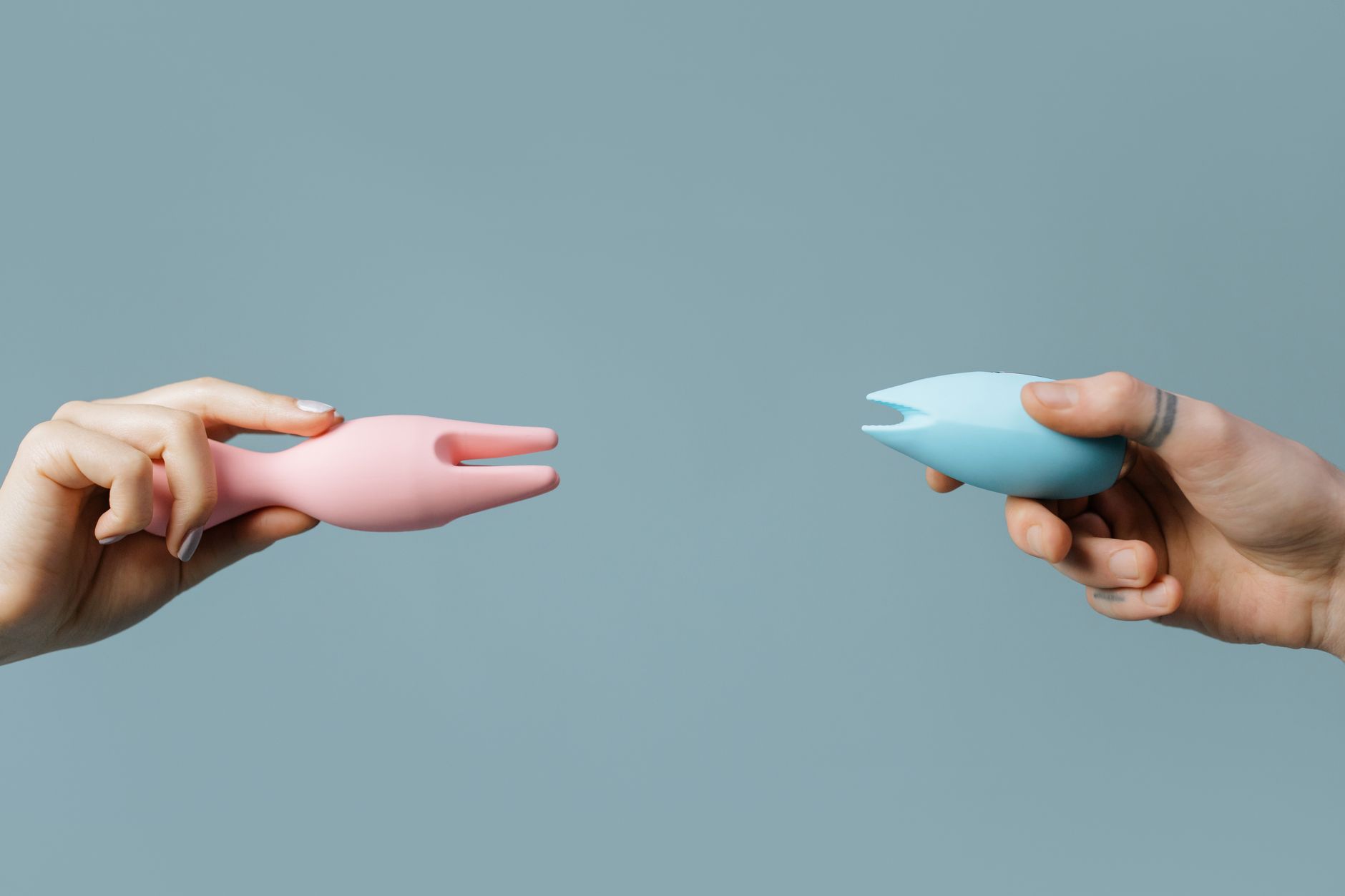
Clitoral vibrators like those from The Lemon Toys work here because they short-circuit that defensive loop. A vibrator isn't asking for an emotional investment right now. It's not needing presence or performance. It's giving you pure sensation on your terms, in your timeline, with an off switch you control. That's revolutionary when you've spent months being touched by default, not choice.
Building back desire in small, realistic doses
You can't manufacture desire through willpower. You also can't get there by waiting until kids go to college. You have to rebuild it in the margins.
Start with solo exploration, not partnered sex. Your brain needs to remember that pleasure exists and that pleasure is for you, not for anyone else. Ten minutes alone with a lemon clitoral vibrator while your partner handles bedtime or a child naps is permission you probably feel guilty about. Grant it anyway.
Set a timer. Not as a pressure tactic, but as proof you can stop. Knowing you have exactly fifteen minutes for yourself, then the body returns to duty, is oddly liberating. It's bounded. It's not a threat to the household. You can disappear into sensation guilt-free.
Choose a low-barrier entry point. The Lem from The Lemon Toys is designed to work quickly without a long warm-up. That matters when your time budget is measured in stolen moments. Speed isn't shallow. It's practical.
Notice what happens after. Most people find that even brief solo pleasure shifts their baseline nervous system state. You're slightly less snappish, slightly more present, slightly more likely to notice your partner across the room instead of just the seventeen tasks between you. That small shift is the foundation of desire rebuilding.
When your partner wants sex and you don't
This is where couples get stuck. Your partner misses you. They miss the physical connection, the feeling of being wanted. You feel guilty for not wanting them. Guilt makes everything worse.
Separate the two conversations. "I need my nervous system to settle" is not the same as "I don't want you." One is physiological. One is relational. You can address both, but not simultaneously.
You might say: "I'm not ready for partnered sex yet, but I'm working on rebuilding desire. That's not about you being less attractive. It's about me being too depleted. Solo pleasure with a vibrator is how I'm starting to come back to my body. That's actually a step toward us eventually having better sex."
That's true and it's actionable for both people. Your partner isn't rejected. You're not forced into unwanted touch. You're building capacity.
When you do have partnered sex, a clitoral vibrator can be a bridge. You're not starting from zero desire. You've primed your nervous system through solo exploration. Adding a vibrator during partnered play means you get to orgasm faster, with less pressure on your already-depleted tank. Your partner gets the connection they're seeking. You're not giving from an empty reserve.
The guilt is the real problem
You feel guilty for not wanting sex. Guilty for needing solo time. Guilty for using a vibrator instead of being present with your partner. Guilty because culturally, mothers are supposed to be inexhaustible sources of nurturing and also sexually available and also maintaining a household and also thriving personally. That's four contradictory jobs.
The guilt is doing more damage than the low desire. Desire can be rebuilt. Guilt corrodes everything it touches.
Your pleasure matters. Not eventually, when kids are older. Now. Rebuilding your relationship with your own body, on your own timeline, with your own pleasure as the goal, is not selfish. It's the foundation for everything else to work.
Creating space when space doesn't exist
I get it. You have no time. Literally none. Someone is always awake or there's always something to do.
You don't need an hour. You need eight minutes. After kids sleep, before you collapse. One morning when everyone's occupied. During your lunch break in the car. The specifics don't matter. What matters is regularity.
Once or twice a week, you're alone with a vibrator. That consistency matters more than duration. Your nervous system starts to expect it. Your body starts to anticipate it. That anticipation is the beginning of desire.
Low-barrier toys designed specifically for efficiency, like clitoral vibrators from The Lemon Toys, matter when you're time-poor. No complicated setup. No long ramp-up. Sensation quickly. Payoff delivered. You're rebuilding desire, not adding another thing that takes forever.
The timeline isn't what you think
You might expect to feel human again when the youngest goes to kindergarten. Or the oldest is a teenager. But most people find their desire starts shifting back much sooner, within weeks of consistent solo exploration. Not back to pre-kid levels. Different. Often better, because you're discovering what you actually want now, not what you wanted at thirty.
Your partner will notice the shift before you do. You'll be slightly more flirtatious, slightly more likely to initiate casual touch, slightly more present. Those small increments add up.
Your relationship doesn't have to be in holding pattern for six years while you wait for capacity to magically return. You're actively building it back, one vibrator session at a time.
Why this works better than willpower
You can't think yourself into desire. You can't decide to want sex the way you decide to fold laundry. Desire is embodied. It lives in the nervous system, not the mind.
A vibrator bypasses the decision-making part of your brain entirely. You're not "trying to feel something." You're experiencing sensation directly. That sensation is real regardless of your headspace. And over time, consistently experiencing pleasure rewires your relationship with your own body and sexuality.
You're not forcing yourself. You're not checking a box. You're remembering that pleasure is available to you, that your body still knows what it wants, that desire isn't gone. It's just dormant.
Talking to your partner about this approach
If your partner feels hurt or rejected right now, a vibrator might feel like a substitution. Reframe it as a bridge, not an alternative.
"I'm rebuilding my relationship with my own pleasure because right now I have nothing left to give. This isn't about you being less attractive or less important. It's about me needing to remember I'm a person with wants of my own. When I do that, I'll have something to bring to us. Right now I'm running on empty."
Most partners understand when it's framed as self-care rather than avoidance. And when they see you actually becoming more present and more interested in physical connection over time, that understanding deepens into genuine support.
The bigger picture
Parenthood is temporary in a very specific way. The intensive phase you're in, the one that's flattened your desire, doesn't last forever. It will change. Kids age, sleep through the night, become independent. But you can't wait for change to happen to you. You have to create it.
Rebuilding desire isn't about being a better partner or a better lover. It's about honoring that you're still a person with a body and wants and pleasure that matters. That's not selfish. That's the foundation everything else is built on.
People also ask
How often should I use a clitoral vibrator when rebuilding desire after kids?
Start with one to two times per week, ideally on a consistent schedule. Your nervous system responds better to predictability than intensity. Once or twice a week is sustainable over months, which is the timeline you need. As desire rebuilds, you might naturally increase frequency. There's no target number. The goal is consistency, not volume.
Can using a vibrator alone make me want sex with my partner?
Not directly, but it creates the conditions where that becomes possible. Solo pleasure rebuilds your relationship with your own body and reminds your nervous system that arousal still exists. That foundation makes partnered sex feel less like another demand and more like connection. It's an indirect path, but it works.
What if my partner feels threatened by me using a vibrator?
That's worth addressing directly. A vibrator isn't competition. It's a tool that helps you access sensation and pleasure when you're too depleted to access it through partnered sex. You might say: "This helps me come back to my body and myself. When I do that, I have more to bring to us. This is actually for both of us in the long run." If the conversation stays stuck, talking with a couples therapist can help both people feel heard.
Is it normal to have zero desire after kids?
Completely normal. Desire lives in a parasympathetic nervous system state. Parenting activates the sympathetic nervous system (fight, flight, freeze) constantly. When survival mode is your default, desire disappears. It's not an indicator that anything is broken. It's an indicator that your nervous system is doing exactly what it's designed to do under extreme conditions.
When will my libido actually come back?
It often starts shifting within weeks of consistent solo pleasure and nervous system regulation. You won't go from zero to your pre-kid baseline overnight. But most people notice small increases in interest and sensation within four to eight weeks of regular vibrator use. The deeper shifts in desire and capacity take longer, usually three to six months.
Can I use a vibrator during partnered sex if I'm not interested in sex solo?
Absolutely. Some people skip solo exploration entirely and bring a vibrator into partnered sex from the start. That can work, but many therapists recommend starting alone because it removes performance pressure. You're learning what your body responds to without anyone else's needs in the picture. Then you can bring that knowledge into partnered sex with more confidence.
Getting started
Your desire didn't vanish. It's waiting for you to create the conditions where it can return. That starts with permission, consistency, and a tool designed for your actual life, not some fantasy version where you have unlimited time and energy.
If you're ready to start rebuilding, begin with one solo session this week. That's enough. Consistency beats perfection every time.
If you have questions about how to approach this conversation with your partner or want support navigating this phase, reach out. We're here to help.