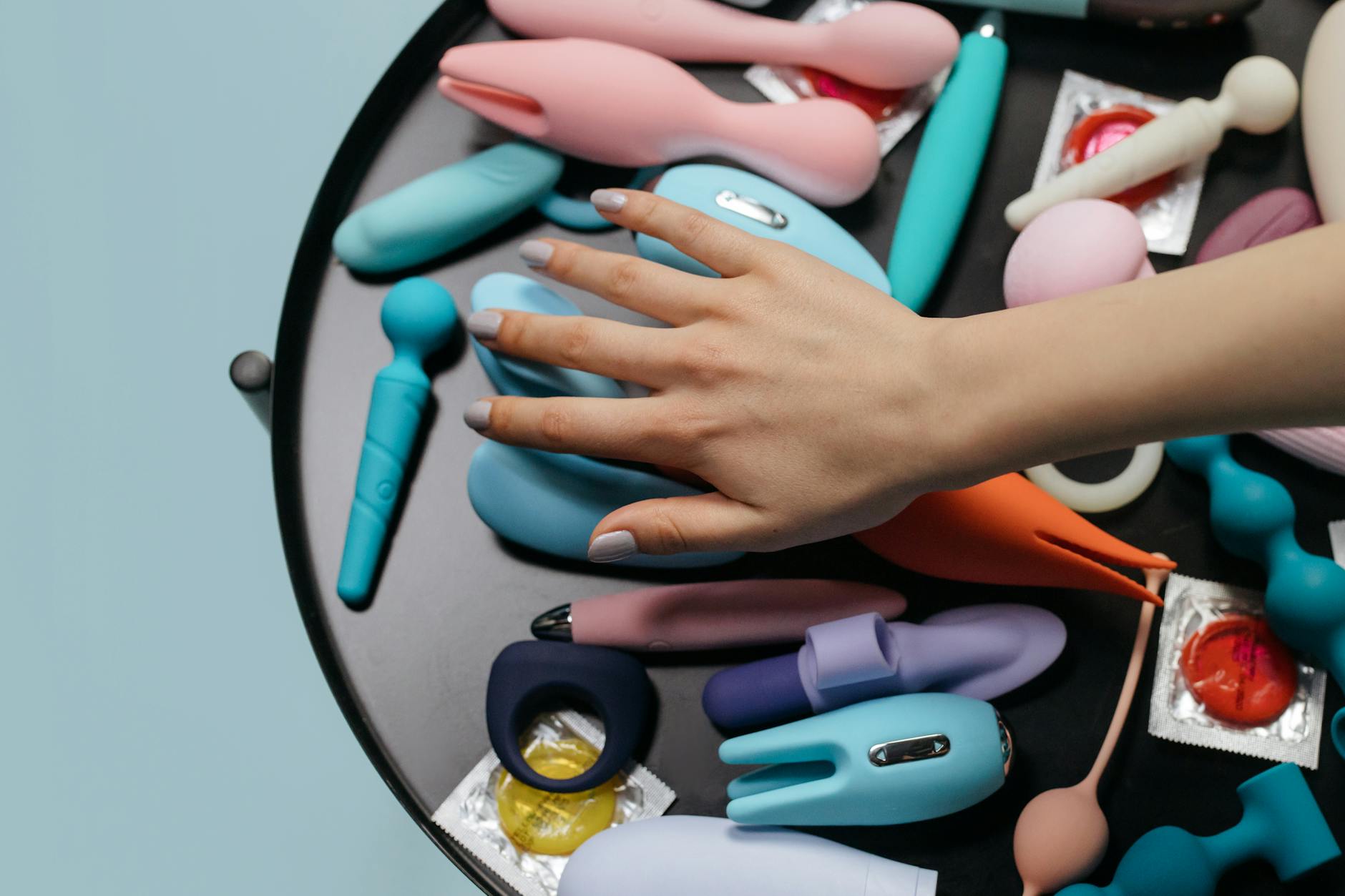
Your partner says they want to be involved. Maybe they saw something online. Maybe they asked directly. Maybe they're nervous you'll use it instead of being with them. Any of these scenarios land the same way: suddenly there's a vibrator on the table and nobody's quite sure what role your partner plays.
Here's what I hear most in my practice: "I worry they'll feel replaced." Or the flip side: "I don't know if I'm supposed to use it, watch, or just get out of the way." Both are legitimate. And both are solved the same way. Not with more communication (you've probably tried that). With clear, practical structure.
It's rarely about the vibrator itself. It's about three things:
First, curiosity. They've been told their whole life that clitoral pleasure is foreign territory. A lemon vibrator makes it tangible. They want to understand what feels good for you.
Second, participation. Sex that includes a toy can feel exclusionary if your partner doesn't have a role. They want to be needed.
Third, and this matters: they're checking that you still want them. A vibrator can trigger an old insecurity, even if the partnership is solid. Involvement is how they confirm it's not a replacement.
You lie back. They hold the Lemon Clitoral Vibrator and control the pressure, angle, and pattern. You get to relax and receive. They get to be actively doing something.
What works here: Start at the lowest setting. Let them experiment with patterns 1 through 3. You tell them what feels good using simple language. Not "more intensity" but "yes, that" or "hold it there." They learn your body's map. It's collaborative without requiring discussion.
What trips people up: They'll go too fast too quickly. Set an agreement beforehand. "We start low and stay there for a while." This isn't me being cautious about vibrators. It's about pacing intimacy. Rushing creates disconnection.
You control the device. They're actively involved through touch, proximity, eye contact, and conversation. They might touch your breasts, your legs, your face. They're not passive.
What works here: Your partner feels less like a bystander. They have permission to participate without taking over. You maintain control of the main event.
What trips people up: Partners sometimes feel uncertain about where to touch or what's appropriate. Solve this before you start. Agree on three zones: what's off-limits, what's welcome, what you want them to initiate.
You use the lemon vibrator on them first. Then they use it on you. Then maybe you have partnered sex. It's a tool, not the main event.
What works here: It reframes the toy as something for both of you. Neither person is the only one experiencing it. The focus stays on the partnership.
What trips people up: Assuming both partners will want identical stimulation. You might love patterns 2 and 3. They might prefer 1. Ask. Separately. Before you start.
You use the Lemon on yourself. They use their hands on themselves or a different toy. You're both experiencing pleasure simultaneously in the same space.
What works here: Maximum autonomy and visibility. You both get to see what the other experiences. There's zero pressure to perform for someone else.
What trips people up: Some partners misread this as "she wants to masturbate alone." Frame it clearly. "I want us both doing this at the same time so we're both focused on feeling good."
Not the big talk. The simple one. Pick a neutral moment. Not during sex or immediately before. Maybe over coffee.
"I want to use this vibrator, and I'd like you to be involved. Here's what I was thinking." Then pick one structure above. Give it a try.
If it doesn't land the first time, you have data. Maybe they wanted more active participation. Maybe they wanted less. Adjust the structure. This isn't static.
One thing I stress: don't treat it as a test of their sexual maturity or openness. "If you loved me, you'd be excited about this." That's unfair. Some people need time to adjust. Some people have hangups they're working through. Impatience kills intimacy faster than any vibrator saves it.
Your partner might not say "I feel replaced." They might say they're tired. Or that the timing doesn't work. Or that they're worried about the cost. Those are usually code for something else.
Call it gently. "I'm sensing some hesitation. What's up?" Then listen. Don't defend. Don't explain why they shouldn't feel that way. Feelings aren't logical.
Common insecurity: "You get more pleasure from that than from me."
Answer: "Pleasure is different things. This does one thing really well. You do other things I can't get anywhere else." Then be specific. What do they provide that the vibrator doesn't? Presence. Unpredictability. Intimacy. Name it.
Common insecurity: "I'm going to lose you to this."
Answer: Show them. Use the vibrator together. Let them see that you're more present, more relaxed, more interested in being close. Pleasure opens people up. You'll likely want more connection, not less.
Who initiates: "I'll ask if you want to try this" or "We'll plan it for Saturday".
Who stops it: Either person can pause for any reason. No questions asked.
What happens after: Cuddle? Space? Sleep? Shower? Decide in advance so nobody feels abandoned post-intimacy.
Charge the Lemon before you start, obviously. Keep water and a washcloth nearby. One of you will be more comfortable with the logistics. Let that person handle them. It removes friction.
Honestly, introducing a device into your sex life often changes the relationship itself. Not badly. Often better. When your partner sees you fully enjoying yourself, when you're more relaxed, when pleasure is on the table as a shared value. That shifts things.
Many couples tell me that the vibrator wasn't the real change. It was learning to talk about what they wanted without shame. The device was just the vehicle.
Say so. Preferences are information, not rejection. Try it their way once. Then try your way. Compare notes. You might discover you like both, depending on your mood. Or you might realize solo use feels better. That's fine. The goal is pleasure, not proving you can do this a particular way.
Yes. Most people do it during foreplay or to finish after partnered sex. Some use it simultaneously with penetration. Start slow, communicate constantly, and pay attention to comfort. The clitoris doesn't need much pressure, so you can usually keep intensity low even during partnered sex.
Don't argue him out of the feeling. It's real to him. But also be clear: your pleasure isn't about his performance. A vibrator does one mechanical thing well. That's not a reflection on his ability to be a good partner. Sometimes this requires him to sit with the feeling for a bit. That's his work to do, not yours to solve instantly.
Compromise on frequency, not rejection. Maybe once a month if he's hesitant. Maybe weekly if you both love it. But don't agree to never use it if you want to. That's self-abandonment. Similarly, don't use it constantly if your partner needs adjustment time. Meet in the middle.
Completely normal. You might crave the intensity a vibrator provides. Your partner might prefer the unpredictability of hands and bodies. Both are valid. You don't have to want the exact same things.
Yes. Not because vibrators are magic. Because using them requires you to communicate about pleasure, to pay attention to what your partner experiences, to normalize desire as something you both deserve. Those skills carry into everything.
The vibrator isn't the relationship fix. It's a conversation starter. A permission slip. A way of saying your pleasure matters, and your partner's presence in that matters too. Used that way, it works. Used as a replacement for communication or connection, it doesn't. Choose the first one. If you want to talk through how to bring this into your partnership without the awkwardness, we're here at The Lemon Toys. You don't have to figure it out alone.